Searching for big chief carts fake vs real means you already suspect something, and honestly, good instinct. Big Chief is one of the most counterfeited cart brands in the country. The real product is licensed, lab tested, and traceable down to the batch. The fakes are mystery oil in convincing boxes.
This guide walks through every check we know, from print quality to the bubble test, so you can tell in about a minute whether your cart is legit. No fluff, just the tells.
Why Fake Big Chief Carts Exist in the First Place
Counterfeiters chase famous packaging, and the chief head is famous. Empty Big Chief boxes, tubes, and even pre labeled carts are sold in bulk on sketchy marketplaces for under a dollar a unit. A seller fills them with cheap, untested oil, charges nearly full price, and pockets the spread.
That’s the whole scam. The packaging can look 90 percent right because it’s copied from the real thing. The oil is where the lie lives, and unregulated oil has tested positive for pesticides, heavy metals, and cutting agents in study after study. This isn’t a “you might get weaker oil” problem. It’s a “you have no idea what you’re inhaling” problem.
So the goal of authentication isn’t brand loyalty. It’s making sure the thing touching your lungs went through a licensed lab.
Big Chief Carts Fake vs Real: The Packaging Checks
Start with the box, because most fakes fail here before you ever see the oil.
Chief Head Logo and Print Quality
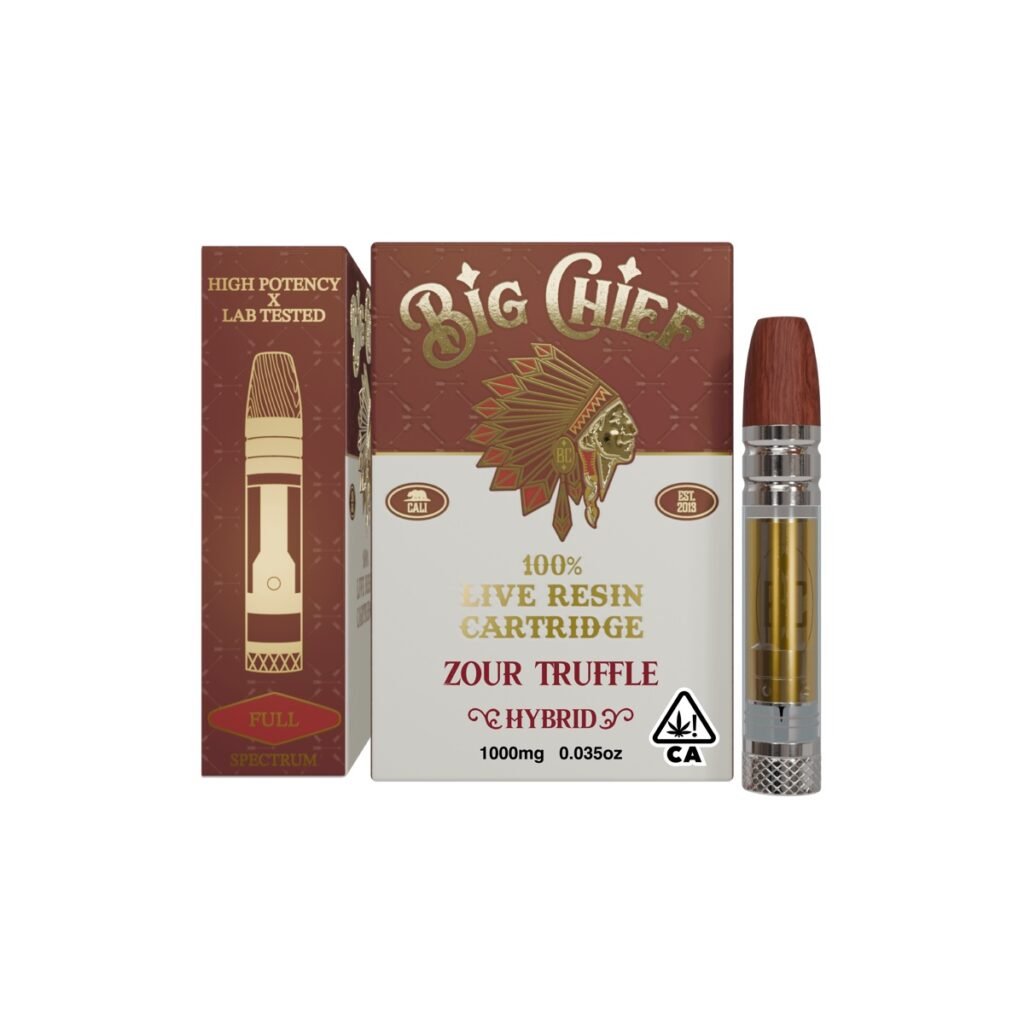
Real Big Chief packaging is printed sharp. The chief head artwork has clean edges, rich color, and consistent alignment on every panel. Fakes tend to show fuzzy linework, washed out or oversaturated colors, off center printing, and typos. Hold the box near a light and look at the fine detail in the headdress. Blurry feathers are a bad sign.
Scratch Code and QR Verification
This is the big one. Authentic packaging carries a scratch off verification code. Scratch it, enter the code on the official verification page, and you should get a first time valid result. Two outcomes should stop you cold: a code that comes back invalid, and a code that comes back “already checked” on a product you just opened, which usually means the code was cloned from a real box.
The QR code should resolve to official verification or batch info. Fakes either print a dead QR, skip it entirely, or link somewhere that has nothing to do with the brand.
License Numbers
Licensed California products list the licensee and license number right on the label. You can look that license up yourself in the state’s public database at the Department of Cannabis Control. A missing license number, or one that doesn’t exist in the search, ends the conversation.
Batch Number and COA
Every real batch has an ID that maps to a certificate of analysis showing potency and safety testing. The batch should be printed or stamped, not part of the box art, since it changes per production run. A “batch number” that’s identical across every unit on a shelf was printed with the box, and that’s a counterfeit tell.
What Real Big Chief Oil Looks Like
Passed the box checks? Now look at the glass.
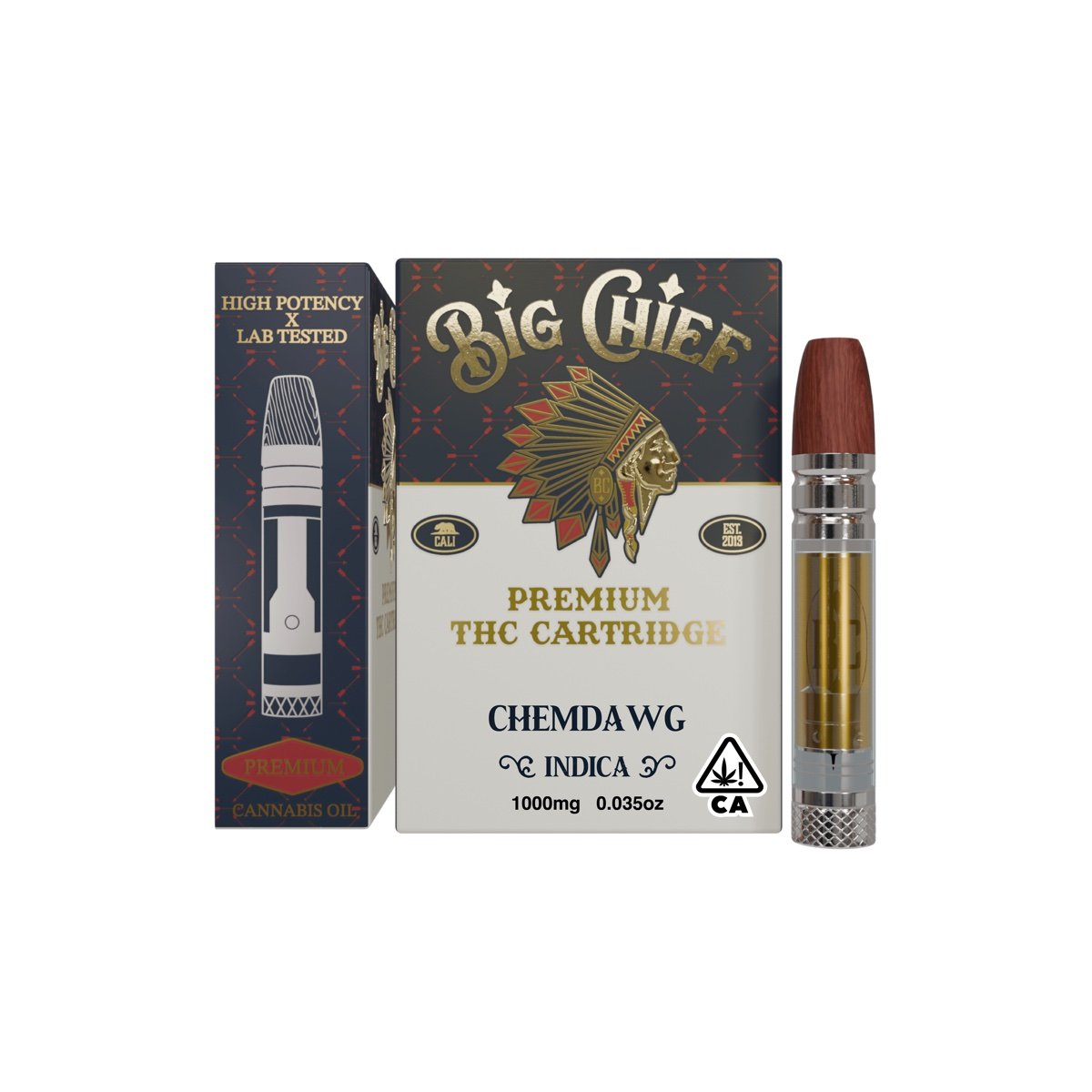
- Color. Real oil runs light gold to amber. Distillate CDT carts lean bright and clear, live resin runs slightly deeper amber. Very dark brown, greenish, or reddish oil is a red flag. So is oil that’s crystal clear like water, which suggests heavy cutting.
- Viscosity. Legit oil is thick. Tip the cart sideways and the big air bubble should crawl, taking several seconds to move. If it zips to the top instantly, the oil is thin, and thin usually means cut.
- The bubble test. Flip the cart upside down and watch that bubble. Slow travel, pass. Fast travel, fail. It’s not lab grade proof, but combined with packaging checks it’s a strong signal.
- Fill level. A gram cart arrives nearly full with a small air gap. A cart that shows up two thirds full was either short filled or partially used, and neither is a good look.
Taste is the last resort check, and ideally you never get there with a fake. Real carts like the Frozen Grapes live resin taste like cannabis terpenes, layered and a little funky. Fakes taste like perfume, burnt sugar, or nothing. A harsh chemical bite in your throat means stop immediately.
Real vs Fake Big Chief: Quick Comparison Table
| Check | Real Big Chief | Fake Big Chief |
|---|---|---|
| Logo print | Sharp edges, rich color | Fuzzy, washed out, misaligned |
| Scratch code | Verifies valid on first check | Invalid, missing, or already used |
| QR code | Resolves to official verification | Dead link or unrelated site |
| License number | Printed and searchable with the state | Missing or fails lookup |
| Batch and COA | Unique per run, matches a lab report | Same on every box, no COA |
| Oil color | Light gold to amber | Dark, cloudy, or water clear |
| Bubble test | Bubble moves slowly | Bubble races to the top |
| Price | Normal dispensary range | Suspiciously cheap |
| Where sold | Official store, licensed shops | Social media DMs, plugs, gas stations |
Where Fakes Actually Come From
Three main channels, in order of volume.
Empty packaging marketplaces. Bulk sites sell replica boxes and branded empty carts openly. Anyone with a syringe of cheap oil becomes a “distributor” overnight.
Social media sellers. Instagram, Telegram, and Snapchat plugs are the number one delivery channel for filled fakes. No licensed brand sells THC carts through DMs. None. If a chief head cart is being sold in a story post with a cash app handle, it’s fake by definition.
Unlicensed shops. Some gray market storefronts and gas stations stock counterfeit branded carts next to the energy drinks. A store selling THC carts without a cannabis license isn’t selling the real thing, whatever the box says.
Notice what’s not on the list: licensed dispensaries and the official store. Their inventory comes through the regulated supply chain with testing paperwork attached. That’s why where you buy is itself an authentication method, arguably the strongest one.
The 60 Second Authentication Checklist
Run this before you vape anything with a chief head on it:
- Inspect the logo print for sharpness and color accuracy.
- Find the scratch code, scratch it, and verify it online. First time valid or walk away.
- Scan the QR and confirm it lands on official verification.
- Check the license number against the state database.
- Confirm a unique batch number and pull the COA if you want the lab results.
- Eyeball the oil: gold to amber, thick, slow bubble.
- Gut check the price and the seller. Deep discounts from random sellers are the oldest tell there is.
Any single hard failure, especially on the scratch code or license lookup, means don’t use it. Six passes and one fail is still a fail.
Big Chief Duo and Disposables: Extra Checks
Counterfeiters follow the product line, so the newer formats get faked too.
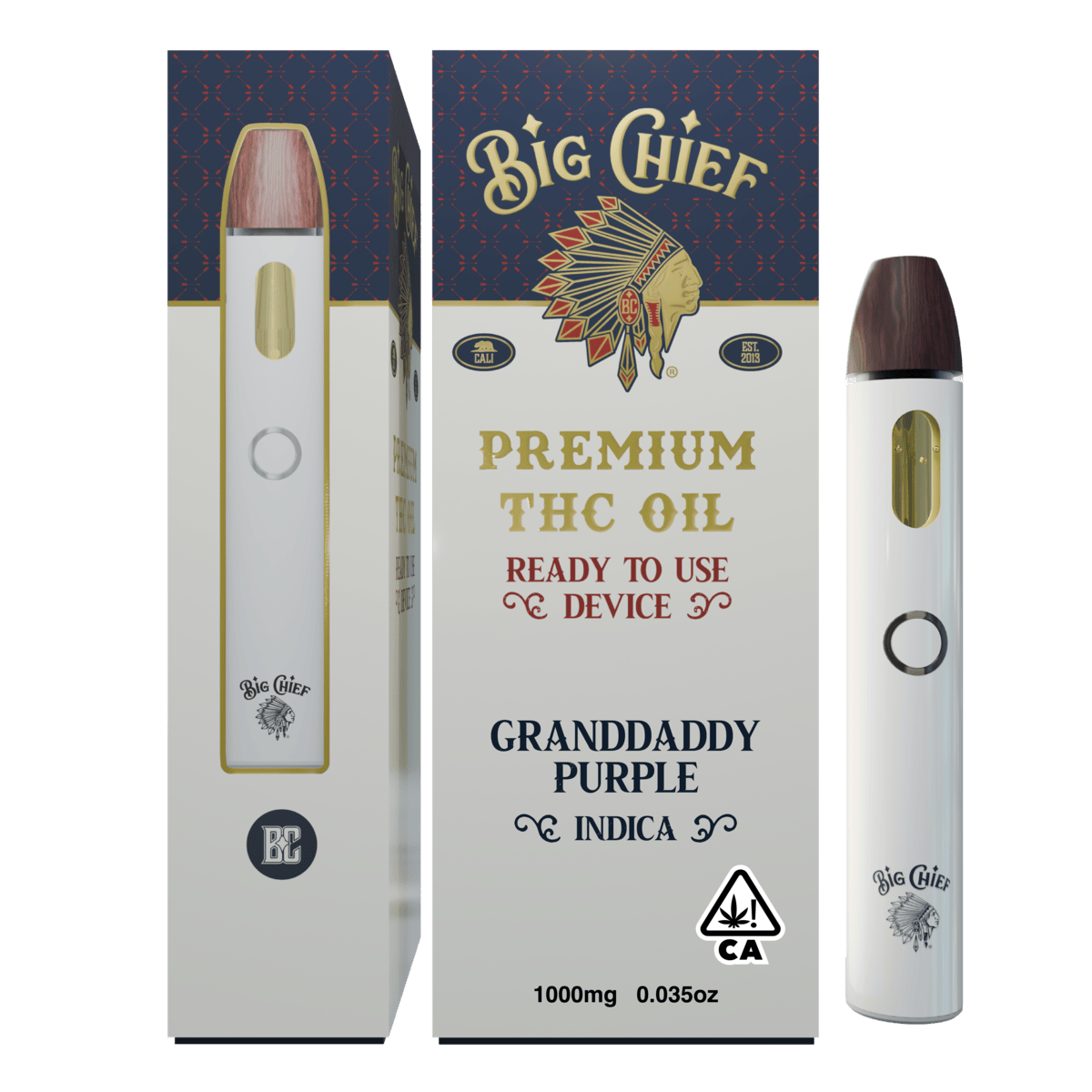
The Duo, Big Chief’s dual chamber 2x1g disposable sold in dispensaries, is a popular target because the higher price makes it worth faking. Real Duos have the same scratch and QR verification as carts, plus build quality fakes rarely match: the chamber switch clicks cleanly, the USB-C port is seated straight, and the print on the device shell matches the box. Fake Duos often have loose switches, crooked ports, and shell printing in slightly wrong colors. On our own site the closest browse point is the disposables category, which carries the current 1g and 2g singles.
For standard disposables, the same rules apply as carts, plus one more: real units like the Skywalker OG disposable are rechargeable. A “Big Chief disposable” with no charge port on a current model run is a fake, full stop.
Why Where You Buy Matters More Than Anything
Every check above can be fooled with enough effort except one: the supply chain. Licensed retail inventory is tracked from cultivation to sale, and the official store ships the same tested product. That paperwork trail is the thing counterfeiters cannot replicate.
So the honest bottom line of this whole guide is short. Buy from the official Big Chief store or a licensed dispensary and the fake vs real question mostly answers itself. Buy from a plug because it’s 15 dollars cheaper and you’re gambling with your lungs to save the cost of a sandwich. We lab test every batch for a reason. Make sure the cart you’re holding is one of ours.
FAQ: Fake vs Real Big Chief Questions
Are Big Chief carts real?
Yes. Big Chief is a licensed California brand with lab tested carts, disposables, flower, concentrates, and edibles. The confusion exists because counterfeit packaging is widely sold and filled with unregulated oil. Real product verifies via scratch code, QR, license number, and batch COA.
How do I verify a Big Chief scratch code?
Scratch the silver panel on the packaging to reveal the code, then enter it on the official verification page linked from the box or QR. A valid first time check means authentic. An invalid code, or one showing as previously checked on a product you just opened, means counterfeit.
What does fake Big Chief oil look like?
Common tells are very dark or reddish color, watery thinness where the bubble races when tilted, cloudiness, and low fill levels. Fakes also tend to taste artificial or harshly chemical. Real oil runs light gold to amber, moves slowly, and tastes like actual cannabis terpenes.
Are Big Chief disposables real?
The licensed disposables are real and come in 1g and 2g formats, including Liquid Diamonds and Melted Diamonds versions. They carry the same verification features as carts, and current models recharge via USB-C. Verify the scratch code and buy from licensed sources, since disposables get counterfeited just like carts.
How can I tell a real Big Chief Duo from a fake?
Check the scratch code and QR first, exactly like a cart. Then inspect hardware: a real Duo has a clean clicking chamber switch, a straight USB-C port, and shell printing that matches the box art. Loose switches, crooked ports, and off color printing are the usual fake tells, along with street prices that undercut dispensaries by half.
Big Chief products are intended for adults 21 and over where legal.